

Gluteal Amnesia – what is it and how can it be treated with Pilates?
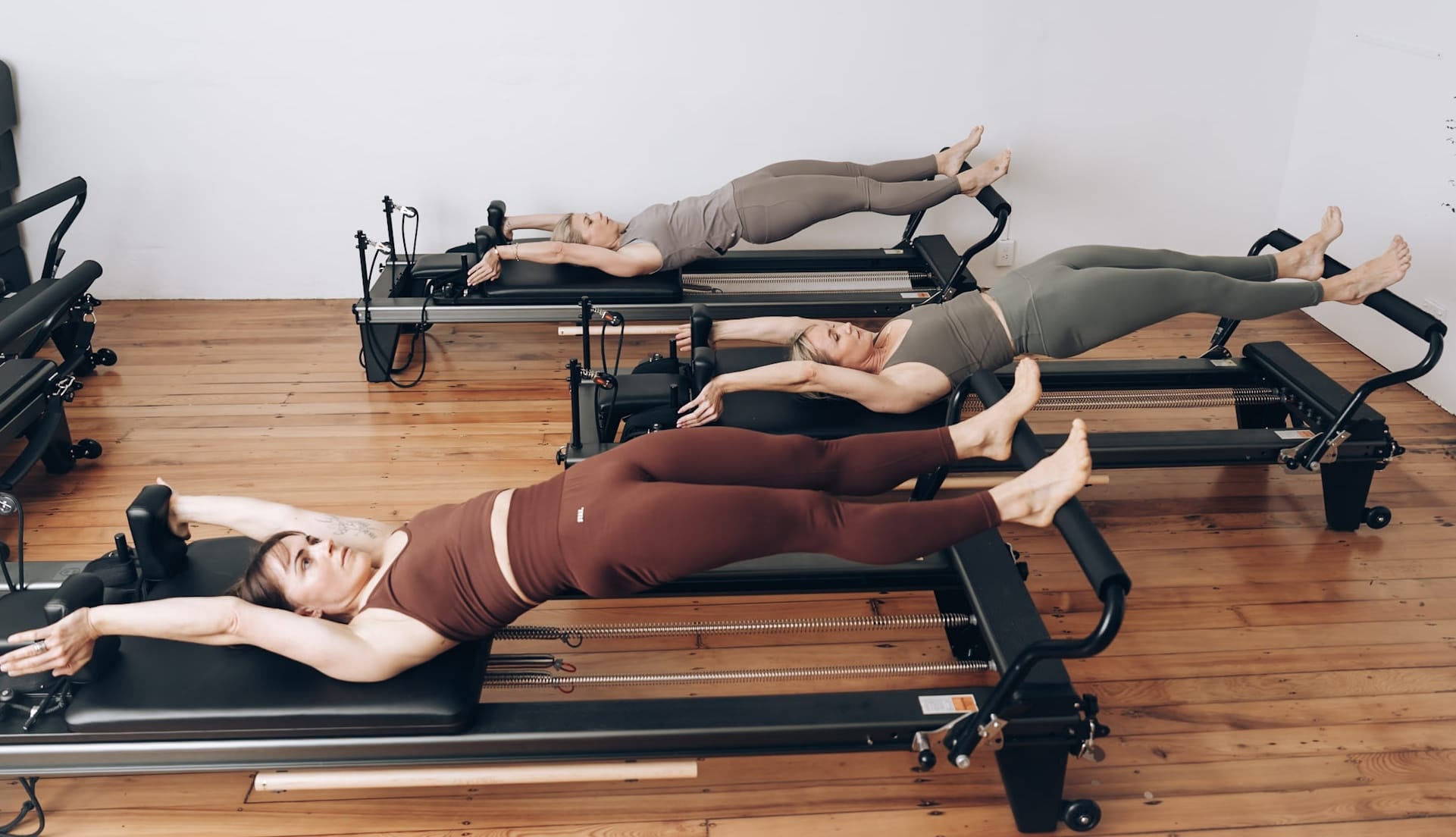
Gluteal amnesia syndrome is not a myth. It is a well documented pattern where the glutes, the body’s largest hip muscles, stop firing properly.
Pilates teachers see it constantly. A client bridges and the hamstrings do all the work. A student cannot recruit the muscle they are told to squeeze. Understanding why this happens, and what to do about it, is core movement science for any Pilates professional.
What Gluteal amnesia Syndrome Actually Is
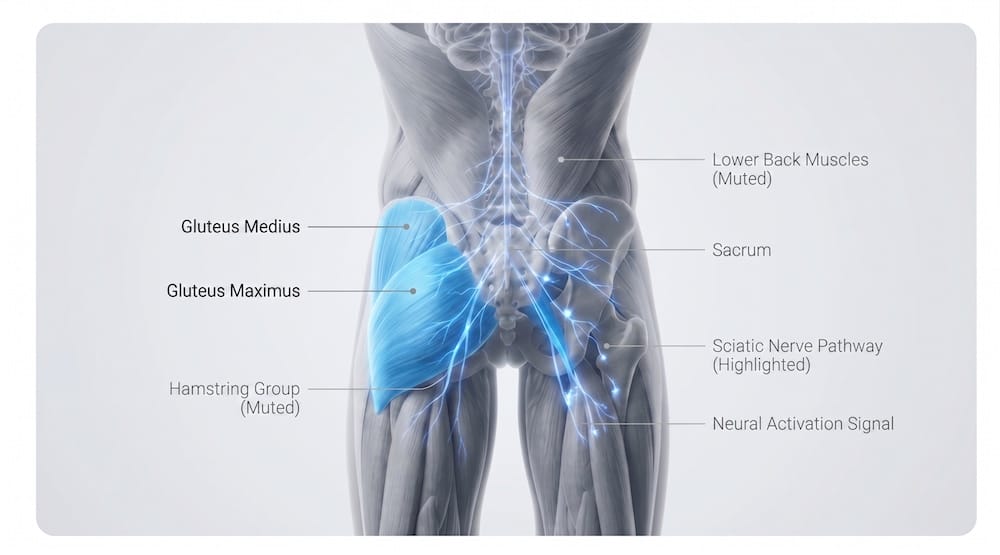
When someone experiences gluteal amnesia, the issue is not necessarily that the muscle is physically damaged or lacking mass, but rather that there is a diminished neural activation. The communication loop between the primary motor cortex of the brain and the gluteal tissues becomes degraded, meaning the motor signals are not properly reaching the muscle. This is a form of neuroplasticity in reverse, where the brain’s motor cortex loses interest in muscles that are not used regularly and eventually forgets how to activate them.
The glutes stabilise the pelvis. They support walking, running, standing up from a chair, and almost every functional movement clients bring into the studio. When that connection weakens, other muscles compensate, and compensation has consequences.
Three Common Causes
- Guarding against pain. When the body protects an injury, it restricts movement around it. One teaching lineage tells of an instructor guiding a student through severe sciatica by deliberately reducing glute engagement to protect the nerve. It worked at the time. Years later, that same student could not recruit the muscle at all in advanced work. The brain had simply stopped using the pathway.
- Constant pelvic tucking. Many fitness methods teach an aggressive posterior pelvic tilt. Held all the time, this flattens the spine’s natural curves and switches off glute support.
- Prolonged sitting. Most chairs curve like a basket, tipping the pelvis backward and compressing the glutes for hours at a stretch. The brain deprioritises muscles it rarely needs to use.
How It Shows Up in the Body
Think of the pelvis as the base of a stack, three scoops on a cone: head and neck on top, torso in the middle, pelvis at the base. If the bottom scoop tilts out of place, everything above it has to shift to compensate. That is why sleeping glutes so often show up as chronic low back, hip, or knee pain rather than “buttock” pain at all.
The Restaurant Owner Analogy
The owner only comes out front when the demand is too large for the regular staff to manage. A gentle double-leg bridge or standard footwork rarely creates that demand. Single-leg work, heavier loading, or a genuine challenge does. That is the stimulus needed to bring the glutes out of the back office.
Actionable Insight
Skip the pre-exercise glute squeeze. Voluntary activation before a light movement does not build strength. Instead, apply enough load or complexity that the glutes have no choice but to engage: single-leg bridges, step-ups, or a hip hinge with the trunk brought forward rather than kept upright.
To correct gluteal amnesia, you cannot simply jump into heavy strengthening exercises like weighted squats or lunges. If the brain-to-muscle connection is offline, your body will automatically seek the path of least resistance and use compensation strategies.
For example, when people with gluteal amnesia attempt to perform hip extension exercises, they frequently experience hamstring cramps because their hamstrings are overrecruiting to do the job of their dormant glutes.
Retraining Dormant Glutes: Principles That Work
- Full release between reps. A muscle needs to learn to switch off completely before it can learn to switch back on. Letting a working leg rest as dead weight between repetitions teaches this on-off pattern far better than constant low-level gripping.
- Ground through the whole foot. In standing and bridging work, driving evenly through all four points of contact of the foot gives the glutes a stable base to fire from, rather than letting the lower back take the load.
- Tactile feedback. A light touch or tap on the glute muscle during an exercise measurably improves a client’s ability to find and recruit it. This is a simple, low-cost cue with real value in one-to-one sessions.
- Progress to standing and functional work. Activating the glutes lying down is only the first step. Clients need standing, weight-bearing exercises, such as a single-leg balance with a controlled reach behind, to transfer that strength into daily movement.
A Clinical Example: Reconnecting the Chain
A foam roller under the heels temporarily restored the missing ankle range. With that one change, he could perform a full, controlled squat, and his glutes were finally back in the movement chain. The lesson for Pilates professionals: gluteal inhibition is frequently a downstream problem. Fix the joint mechanics further down the chain, and the glutes often switch back on by themselves.
Why This Matters for Your Teaching
For physiotherapists, osteopaths, and experienced instructors, gluteal amnesia syndrome is a useful lens for programming around chronic pain, post-surgical rehabilitation, and joint replacement recovery. Polestar’s Continuing Education content goes deeper into the biomechanics and case-based reasoning behind this kind of work.
As with any movement concern involving pain, injury, or a recent surgical history, clients should always be guided by a qualified movement or health professional rather than a generic exercise plan.
Live Aligned with Dr. Brent

In this podcast discussion, Dr. Brent and Dr. Christopher Powers, professor and associate chair in the Division of Biokinesiology and Physical Therapy at USC, discuss the hip’s role in knee health, and in this conversation Dr. Powers explains “glute amnesia” – the surprisingly common phenomenon where patients simply can’t activate their glute muscles, even when they want to. He and Dr. Brent trace the connection from sedentary lifestyles and lost childhood movement patterns all the way to a troubling rise in ACL injuries among kids as young as ten. Along the way, they make the case for prevention, screening, and looking at movement – not just strength – as the real key to lasting knee health.
Dr. Brent, himself a physical therapist, former dancer, and pole vaulter, underwent bilateral hip replacements due to severe joint degeneration from years of high-impact sports. Despite his extensive knowledge, the severe pain and subsequent surgeries triggered arthrogenic inhibition, causing his glutes to completely shut down. He had to step back and patiently use basic, targeted isometric holds and pelvic re-education to force his motor cortex to locate and re-engage his glutes during his recovery.
Frequently Asked Questions
What is Gluteal Amnesia Syndrome?
What are the main causes of gluteal deactivation?
How Does Gluteal Amnesia Show Up in Daily Movement?
How do I safely retrain dormant glutes without triggering compensation patterns?
Why is understanding gluteal amnesia important for Pilates instructors and physiotherapists?
Ready to Build Your Movement Expertise?
Join Polestar's community of movement professionals and go deeper into the science behind patterns like gluteal amnesia syndrome.
Here are our current courses - click on their name to go to more details:
Polestar Anatomy Online:| LOCATION | NAME | WHEN |
|---|---|---|
| From the comfort of your own home | Polestar online Anatomy Course | Anytime, anywhere |
| 2026 Course Dates | NEW AUCKLAND CBD and ONLINE |
|---|---|
| Polestar Principles of Movement Compulsory for ALL students for ALL courses. | Fri 28 Aug '26 - 1:00 to 5:00pm Sat 29 Aug - 12:30pm - 5pm IN PERSON |
The above session must be completed prior to attending your first face-to-face course weekend. |
|
| MAT-1 | Sat 19 Sept '26 - 12:00 to 6:00pm Sun 20 Sept '26 - 8:00am to 5:00pm |
| PRACTICUM-1 | TBC |
| MAT-2 | Sat 14 Nov '26 - 12:00 to 6:00pm Sun 15 Nov '26 - 8:00am to 5:00pm |
| PRACTICUM-2 | TBC |
| Location | Course | Principles | REFORMER - 1 | REFORMER PRACTICUM #1 | REFORMER - 2 | REFORMER PRACTICUM #2 | REFORMER - 3 | REFORMER PRACTICUM #3 |
|---|---|---|---|---|---|---|---|---|
| NEW 2026 Auckland in-person / Rest of New Zealand via Zoom | Reformer Series incl. Practicum Sessions | Fri 28 Aug '26 - 1:00 to 5:00pm Sat 29 Aug - 12:30pm - 5pm IN PERSON | Sat 5 Sept '26 - 12:00 to 6:00pm Sun 6 Sept '26 - 8:00am to 5:00pm | TBC | Sat 10 Oct '26 - 12:00 to 6:00pm Sun 11 Oct '26 - 8:00am to 5:00pm | TBC | Sat 21 Nov '26 - 12:00 to 6:00pm Sun 22 Nov '26 - 8:00am to 5:00pm | TBC |
| 2026 Course Dates | AUCKLAND CBD |
|---|---|
| 8hr Polestar Principles of Movement Compulsory for ALL students for ALL courses. | |
The above session must be completed prior to attending your first face-to-face course weekend. |
|
| S/R-1 - 14hrs | |
| 2hr Virtual Case Study-1 | |
| S/R-2 - 14hrs | |
| 2hr Virtual Case Study-2 | |
| 4hr Practicum -1 | |
| S/R-3 - 14hrs | |
| 2hr Virtual Case Study-3 | |
| S/R-4 - 14hrs | |
| 2hr Virtual Case Study-4 | TBC |
| 4hr Practicum -2 | Sat 15 Aug |
| S/R-5 - 14hrs | Sat 12 Sept Sun 13 Sept |
| 2hr Virtual Case Study-5 | TBC |
| S/R-6 - 14hrs | Sat 17 Oct Sun 18 Oct |
| 4hr Practicum -3 | Sat 14 Nov |