


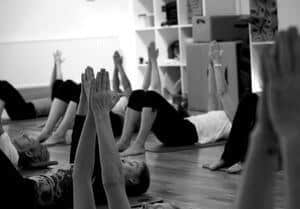
Find Relief from Sciatica: How Pilates Can Transform Your Life
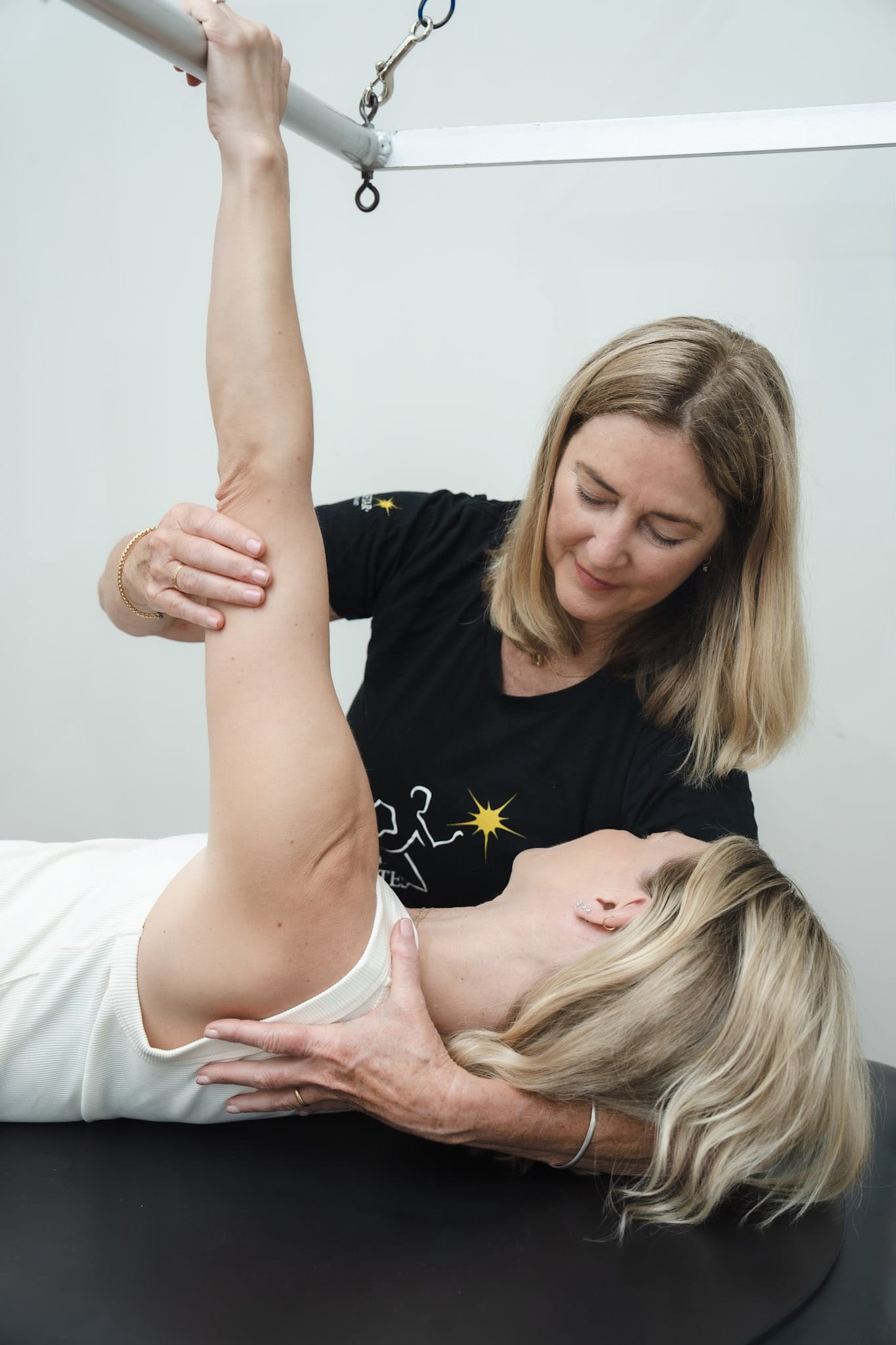
Sciatica pain can be utterly debilitating. The shooting pain down your leg. The numbness that won’t go away. The constant worry that movement will make it worse. Millions of people experience this agony every single day, yet many don’t realise that a solution exists.
Pilates offers a powerful, evidence-based approach to managing sciatica and reclaiming your life. Unlike quick fixes or temporary pain relief, Pilates works with your body’s natural healing process. This is the Polestar Difference – a philosophy grounded in science, practical application, and genuine healing.
Understanding Sciatica and Why Pilates Works
Sciatica isn’t just back pain that travels down your leg. It’s a specific condition affecting the sciatic nerve itself. You’ll typically feel one-sided leg pain that’s worse than any back pain you experience. The discomfort often travels below the knee, into your calf or foot. It might feel like burning, tingling, or sharp shooting sensations.
Here’s the good news: research shows that 94% of patients with sciatica improve significantly within a year using conservative management. This means exercise-based treatment works. Pilates is one of the most effective conservative approaches available.
Sciatica isn’t just back pain travelling down your leg—it’s a specific condition affecting the sciatic nerve itself. Research shows 94% of patients improve significantly within a year using conservative exercise-based treatment like Pilates. The nerve is sensitive and protective; qualified instructors design programmes that keep it relaxed whilst building strength.
Pilates done correctly helps because it addresses root causes. It’s not just managing the pain. Your body likely has mechanical imbalances – perhaps your sacroiliac joint isn’t stable, or your spine isn’t properly aligned. A skilled Pilates instructor recognises these imbalances and designs a programme specifically for you.
The sciatic nerve is sensitive and protective. It doesn’t like being stretched or compressed. Qualified Pilates instructors know this intimately. They modify exercises so your nerve stays relaxed whilst your body gets stronger.
Customised Programming for Your Unique Body
One real-life story perfectly illustrates Pilates’ transformative power. Jillian Hessel, a second-generation Pilates instructor, suffered from severe scoliosis and sciatica so intense she couldn’t sit in a car or movie theatre for more than twenty minutes. Every car journey meant shooting pain radiating down her leg.
When Jillian started working with a Pilates expert, something remarkable happened. Rather than pushing her onto the equipment, her instructor took time to understand her misalignments. This expert discovered Jillian needed foundational work – breath control, gentle core strengthening, and spinal alignment before anything else. Crucially, they avoided strong glute engagement because it aggravated her sciatica.
This tailored approach changed everything. Jillian healed. She became a Pilates instructor herself. Today, she uses this same principle: every body is different, and every programme should reflect that difference.
Every body is different. Polestar instructors assess each client’s unique presentation and adapt accordingly. This tailored approach prevents further irritation whilst promoting genuine healing. Rather than pushing you onto equipment, they discover what misalignments exist and build a foundation of breath, alignment, and core connection before advancing.
This is exactly what Polestar Pilates Teacher Training emphasises. Continuing Education through CECs ensures instructors stay current with evidence-based methods. They learn how to assess each client’s unique presentation and adapt accordingly. This approach prevents further irritation whilst promoting genuine healing.
The SOS Method: Taking Control of Your Pain
Another powerful strategy comes from working with a concept called the “SOS programme.” When clients experience sciatica, they often develop fear around movement. They think every sensation means danger. This fear actually amplifies pain and prevents recovery.
The SOS method works differently. You learn to identify your personal warning signs – that subtle tingle or sensation that tells you a flare-up is coming. Rather than panicking, you deploy customised Pilates exercises immediately. These movements act as your emergency response system.
This approach is genuinely life-changing. It shifts power back to you. You’re no longer a victim of sciatica. You’re the expert in your own body. You recognise the signs. You respond with confidence. Fear decreases. Pain decreases. Life improves.
Fear amplifies pain and prevents recovery. The SOS method teaches you to recognise personal warning signs—that subtle tingle that signals a flare-up is coming. Rather than panicking, you deploy customised Pilates exercises immediately as your emergency response. This shifts power back to you; you become the expert in your own body.
Modifying Movements to Keep Your Nerve Happy
Pilates works through intelligent movement modification. Think of the sciatic nerve like an introvert. It needs space. It doesn’t like being squeezed or stretched excessively.
Some Pilates exercises create nerve tension – they stretch or compress the sciatic nerve. For someone with active sciatica, these movements cause flare-ups. But they’re not “bad” exercises; they’re just wrong for where you are right now.
A qualified instructor knows how to adapt. If an exercise aggravates your nerve, they offer alternatives. Perhaps bending your knees relieves tension. Maybe changing your spinal position helps. These modifications allow you to strengthen your core and hips safely.
Pilates works through intelligent movement modification. The sciatic nerve needs space—it doesn’t like being squeezed or stretched excessively. A qualified instructor knows exactly which exercises create nerve tension and offers alternatives. Bending knees, changing spinal position, or adjusting alignment relieves tension whilst allowing you to strengthen your core and hips safely.
💡 Actionable Insight 💡
Consider the difference between Elephant and Cat Stretch. Elephant fully extends the legs and creates significant nerve tension. Cat Stretch bends the knees, putting the nerve “on slack.” For someone managing sciatica, Cat Stretch makes perfect sense.
Building Confidence Through Movement
Beyond the physical benefits, Pilates addresses something equally important: your relationship with your body. Many people with sciatica become terrified of movement. They’ve experienced pain. They assume movement causes damage.
Here’s the truth: pain doesn’t always mean damage is occurring. Your nervous system is cautious – sometimes overly cautious. It’s like a smoke detector. Just because the alarm sounds doesn’t mean your house is burning down. You might just be making toast.
Pilates reframes this experience. Under professional guidance, you discover you’re stronger than you thought. You move safely. Nothing breaks. Your confidence rebuilds. This psychological shift is profoundly healing.
This is what Polestar Continuing Education emphasises. Through CECs and Pilates Teacher Training, instructors learn to support clients emotionally as well as physically. They understand pain science. They know how to communicate hope without dismissing your experience.
Pain doesn’t always mean damage is occurring. Your nervous system is cautious—sometimes overly cautious. Pilates under professional guidance proves you’re stronger than you thought. You move safely, nothing breaks, and your confidence rebuilds. This psychological shift is as profoundly healing as the physical strengthening.
Getting Started Safely
⚠️ Please Note ⚠️
It is important to perform these exercises under the guidance of a qualified Pilates instructor, especially if you are new to Pilates or have ongoing back issues. Always consult with a healthcare professional before starting any new exercise programme, particularly if you suffer from chronic pain conditions like sciatica.
Your journey with Pilates begins with assessment. A skilled instructor will ask about your history, listen to your story, and observe how your body moves. They’ll identify what aggravates your sciatica and what helps. This information guides everything.
You won’t dive into intense exercises immediately. You’ll start gently, building a foundation. Breathing. Alignment. Core connection. These basics matter more than intensity. As your body responds, your programme evolves.
Consistency matters more than perfection. Regular Pilates practice – even just two or three times weekly – creates lasting change. Your nervous system settles. Your strength increases. Your pain decreases.
Your Path to Healing Starts Today
Sciatica doesn’t have to control your life. Pilates offers a genuine, evidence-based path to recovery. Through skilled instruction, customised programming, and intelligent movement modification, you can move without fear. You can regain strength. You can reclaim the activities you love.
The Polestar Difference lies in expert instruction grounded in science and practical application. Our Pilates Teacher Training programmes ensure instructors understand not just exercise mechanics but the healing potential of movement.
Ready to take control of your sciatica? Find a qualified Polestar instructor near you.
Live Aligned with Dr. Brent

In this podcast discussion, Dr. Brent and physical therapist John Sievert explore the complexities of sciatica, reframing it not as a definitive diagnosis but as a description of symptoms involving the sciatic nerve.
Sievert, an expert in motivational interviewing, emphasises that the language clinicians use can either perpetuate fear or foster a therapeutic alliance that promotes healing. He argues that 90% of cases resolve through education and positive movement experiences rather than surgery, cautioning that over-reliance on imaging like MRIs often leads to unnecessary anxiety over normal, age-related changes. By shifting the focus from pathology to self-efficacy, the conversation highlights that movement is medicine and that empowering patients to trust their bodies is the most effective path to recovery.
Are you a Pilates professional interested in deepening your knowledge? Explore Polestar’s Courses and Continuing Education programmes incl. CECs. Our evidence-based approach ensures you’re equipped to support clients with complex conditions like sciatica with confidence and skill.
Frequently Asked Questions
Is Pilates safe for sciatica pain?
Can Pilates cure sciatica?
What Pilates exercises should I avoid with sciatica?
How often should I do Pilates for sciatica relief?
Do I need medical approval before starting Pilates for sciatica?
Ready to Build Your Movement Expertise?
Join Polestar's community of movement professionals and go deeper into the science behind patterns like gluteal amnesia syndrome.
Here are our current courses - click on their name to go to more details:
Polestar Anatomy Online:| LOCATION | NAME | WHEN |
|---|---|---|
| From the comfort of your own home | Polestar online Anatomy Course | Anytime, anywhere |
| 2026 Course Dates | NEW AUCKLAND CBD and ONLINE |
|---|---|
| Polestar Principles of Movement Compulsory for ALL students for ALL courses. | Fri 28 Aug '26 - 1:00 to 5:00pm Sat 29 Aug - 12:30pm - 5pm IN PERSON |
The above session must be completed prior to attending your first face-to-face course weekend. |
|
| MAT-1 | Sat 19 Sept '26 - 12:00 to 6:00pm Sun 20 Sept '26 - 8:00am to 5:00pm |
| PRACTICUM-1 | TBC |
| MAT-2 | Sat 14 Nov '26 - 12:00 to 6:00pm Sun 15 Nov '26 - 8:00am to 5:00pm |
| PRACTICUM-2 | TBC |
| Location | Course | Principles | REFORMER - 1 | REFORMER PRACTICUM #1 | REFORMER - 2 | REFORMER PRACTICUM #2 | REFORMER - 3 | REFORMER PRACTICUM #3 |
|---|---|---|---|---|---|---|---|---|
| NEW 2026 Auckland in-person / Rest of New Zealand via Zoom | Reformer Series incl. Practicum Sessions | Fri 28 Aug '26 - 1:00 to 5:00pm Sat 29 Aug - 12:30pm - 5pm IN PERSON | Sat 5 Sept '26 - 12:00 to 6:00pm Sun 6 Sept '26 - 8:00am to 5:00pm | TBC | Sat 10 Oct '26 - 12:00 to 6:00pm Sun 11 Oct '26 - 8:00am to 5:00pm | TBC | Sat 21 Nov '26 - 12:00 to 6:00pm Sun 22 Nov '26 - 8:00am to 5:00pm | TBC |
| 2026 Course Dates | AUCKLAND CBD |
|---|---|
| 8hr Polestar Principles of Movement Compulsory for ALL students for ALL courses. | |
The above session must be completed prior to attending your first face-to-face course weekend. |
|
| S/R-1 - 14hrs | |
| 2hr Virtual Case Study-1 | |
| S/R-2 - 14hrs | |
| 2hr Virtual Case Study-2 | |
| 4hr Practicum -1 | |
| S/R-3 - 14hrs | |
| 2hr Virtual Case Study-3 | |
| S/R-4 - 14hrs | |
| 2hr Virtual Case Study-4 | TBC |
| 4hr Practicum -2 | Sat 15 Aug |
| S/R-5 - 14hrs | Sat 12 Sept Sun 13 Sept |
| 2hr Virtual Case Study-5 | TBC |
| S/R-6 - 14hrs | Sat 17 Oct Sun 18 Oct |
| 4hr Practicum -3 | Sat 14 Nov |
Love this. Can you provide the references you used? Especially for this statement: Here’s the good news: research shows that 94% of patients with sciatica improve significantly within a year using conservative management. Always love having scientific proof of what we do.
Hi Rachael, thank you for posting your comment – and a great question also!
One of the sources used is “Koes, B. W., van Tulder, M. W., & Peul, W. C. (2007). Diagnosis and treatment of sciatica. BMJ, 334(7607), 1313–1317. https://doi.org/10.1136/bmj.39223.428495.be“. Check out also the conversation between Dr. Brent Anderson and Dr. John Sievert, as they mention several books, scientific studies, academic institutions, and professional organisations.
Here is a comprehensive list of the sources and resources they reference:
Books
– The Interactive Patient by Dr. Carol Davis — A book highlighting a patient-centric approach to care, focusing on letting patients participate and tell their own stories
– Principles of Movement by Dr. Brent Anderson — Dr. Brent’s book, which is available on Amazon
Scientific Research, Studies, & Articles
– The Japanese MRI Study — A large study out of Japan that analysed spinal MRIs of several thousand asymptomatic patients, showing a high prevalence of degenerative joint and disc disease in individuals with absolutely no symptoms
– Albert Bandura’s Work on Self-Efficacy — Dr. Brent mentions drawing from Bandura’s foundational psychological work on self-efficacy for his own doctoral dissertation
– The Buffalo University Self-Efficacy Study (Hopkins) — A study out of Buffalo University by a researcher named Hopkins, demonstrating that a patient’s self-efficacy score has an 82% predictability rate on functional outcomes for chronic low back pain
– “The Fritz Article” — An article/study addressing patient education and the trajectory of healing
– Jeremy Lewis’s Lifestyle Medicine Research — Dr. John Sievert references the current work of Jeremy Lewis out of England, which highlights how focusing on the six pillars of lifestyle medicine improves long-term outcomes for chronic pain patients
Professional & Educational Organizations
– MINT (Motivational Interviewing Network of Trainers) — The professional organization and program where Dr. Sievert completed his seven-year training journey to become a fellow
– Evidence in Motion (EIM) — An educational program where Dr. Sievert earned his doctorate in physical therapy, teaches clinical weekend courses, and worked alongside chronic pain expert Dr. Adriaan Louw
– Kaiser Permanente Northern California — Mentorship, residency, and fellowship programs where both Dr. Brent and Dr. Sievert have taught or trained
– Curtin University (Perth, Western Australia) — The institution where Dr. Sievert received his graduate diploma in manipulative therapy and Master’s in physiotherapy
Glad you love the article!