
The Depth of Mastery: Why Polestar Pilates Training Is a Vocation, Not Just a Certificate
Pilates Teacher Training should be a journey of professional transformation. Dr Brent Anderson founded Polestar Pilates more than thirty years ago. He is a licensed Physical Therapist and an Orthopaedic Certified Specialist. He spent decades merging the science of rehabilitation with the art of movement. Dr Anderson realised early in his career that true mastery cannot be rushed. Many potential students ask a common question. They want to know why Polestar courses have such an extended duration.
The answer is simple. Polestar treats Pilates Teacher Training as a vocation and a trade. We do not offer a quick certification. We offer a professional transformation. Our comprehensive training requires a minimum of 450 hours. This structure ensures our graduates are the most highly skilled and confident in New Zealand and the world.
Polestar Pilates currently operates as an expansive global educational organisation with a presence in over 80 countries. This international reach supports a community of more than 35,000 graduates and is guided by an expert faculty of over 600 educators worldwide, delivering quality comprehensive Pilates education in more than 15 languages.
Moving Beyond Repertoire to the Physics of Movement
Many short courses focus on the “what” and the “how” of Pilates. They teach where to put limbs and which springs to select. This is often called teaching “feet and straps”. Polestar takes a different approach. We focus on the “why” behind every movement.
It takes time to learn the physics and biomechanics of human movement. A Polestar education ensures a teacher understands how gravity affects the body. They must understand how load and angles impact different structures. This depth of study is critical for safety. It allows an instructor to adapt an exercise for a 280-pound rugby player. They can then safely modify that same exercise for a fragile rehabilitation client.
Standardised recipes do not work in professional practice. Every body is a unique ecosystem. Instructors must understand the science of movement foundation. They must learn anatomy, physiology, and arthrokinematics. These complex subjects require months of integration to become useful tools.
Developing Critical Reasoning and Assessment Skills
Another reason our courses take time is our heavy emphasis on assessment. We use the Polestar Assessment Tool (PAT). This tool helps practitioners understand exactly why a client is in their current state. It is not enough to see that a person has back pain. An expert must understand the underlying movement dysfunction.
We train our teachers to discover the internal story of the client. We ask what the client wants to achieve. We identify the physical or emotional barriers in their way. This process requires advanced interviewing skills. It also requires an understanding of the International Classification of Function and Disability (ICF) model.
Clinical integration is a core theme of our curriculum. We provide in-depth instruction in Pilates rehabilitation principles. Students learn to solve movement problems using a critical reasoning algorithm. They test coordination first. They test control next. Finally, they assess mobility. Mastering this logic takes practice and time.
The Mastery of Observation and Presence
Observation and presence are the most difficult skills to teach. They cannot be rushed or faked. An instructor must learn to silence their own internal distractions. They cannot be thinking about their grocery list while with a client. They must be fully present in the moment.
True proficiency requires pattern recognition. This skill only comes from watching hundreds of different bodies move. Students need a safe environment to fail and try again. Failing is a part of the learning process. It prepares the practitioner to be successful in the future.
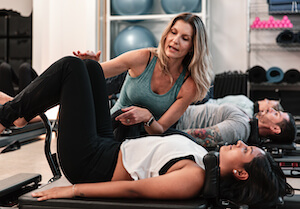
Polestar provides many more hours of in-person, hands-on practicums than other courses in New Zealand. This ensures our graduates are not just “counting” or “leading choreography”. They are truly teaching and facilitating change. This level of expertise requires a significant time investment.
Embodiment and the Journey of Self-Discovery
A Polestar educator believes the method must “sink into the body” of the teacher. We warn against “fast” trainings where modules are crammed together. A teacher needs a journey through their own system to be effective. They must shift from an “outside-in” perspective to an “inside-out” perspective.
This means the teacher must feel the movement themselves. They must experience the “Polestar Difference” in their own tissues. When a teacher embodies the work, they can pass that feeling on to their clients. They move from declarative learning to procedural learning. The movement becomes automatic and spontaneous.
Joseph Pilates believed in whole body commitment. He wanted people to perform their daily tasks with “spontaneous zest and pleasure”. We cannot facilitate this zest in others if we have not found it in ourselves. Our training creates space for this personal growth and self-actualisation.
The Professional Analogy
To help you visualise this, consider the work of an electrician. If you needed your house wired, you would not hire someone who took a weekend workshop. You would hire a licensed professional. This professional has completed a multi-year apprenticeship. Polestar views the complexity of the human body with that same level of professional seriousness.
You are the steward of your client’s body and mind. You are a movement professional. You are a pathokinesiologist. These titles carry immense responsibility. We take the time to ensure you are ready for that responsibility.
The world is moving, and we are moving with it. We invite you to join our scholarly community. Your career deserves a foundation that stands the test of time.
Conclusion
Are you ready to deepen your understanding of the human body? Do you want to master the assessment and critical reasoning skills necessary for this population?
Explore Advanced Continuing Education, View Course Dates, or Consult us to discuss your clinical application or career path. Let us help you become the expert your clients need.