

Decoding the Body in Motion: Why Anatomy Must Be Felt, Not Just Memorised
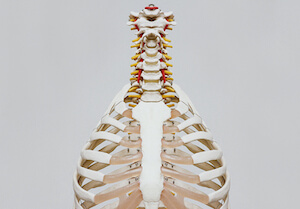
Many new Pilates teachers face a common struggle. They spend months memorising muscle origins and insertions. They learn the names of every bone. Yet, when a client stands before them in pain, that knowledge feels heavy. It feels unusable. It becomes something to memorise rather than something to work with.
You cannot teach movement well if you only understand anatomy in isolation. You must understand movement patterns. You must understand how the body organises itself in motion. When anatomy is integrated into movement, it becomes intuitive. It becomes practical. It becomes something you feel while teaching. You can see it and respond to it in real time.
At Polestar, we simplify complexity. We ensure anatomy supports your decisions instead of slowing you down. We do not just teach you exercises. We teach you how to decode the human body.
The Movement Principles: The “Why” Behind the Work
Every Polestar pathway begins with the Movement Principles. This is our starting point. We build a deep understanding of how the body organises itself. Think of the Movement Principles as an instruction manual for the body.
This manual helps you understand the “why” behind every movement choice. It explains how load is managed. It reveals what supports efficiency and adaptability over time. We do not just ask you to learn these principles intellectually. We ask you to embody them.
You must feel the principles in yourself first. This is where teaching with purpose truly starts. When you understand how alignment affects load in your own hip, you can see it in your client. When you feel the difference between a rigid spine and a mobile spine, you can cue it effectively.
Decoding the Body: Assessment as a Bridge
From this foundation, we introduce the Polestar Assessment Tool (PAT). This is a unique tool developed by Dr Brent Anderson PT, PhD, OCS, NCPT. It is not a test to pass or fail. It is a method of discovery.
Together, the Movement Principles and the PAT teach you how to decode the body. You learn to observe how the body organizes itself. You recognize the movement strategies at play. You use that information to understand what is really happening beneath the surface.
A limitation stops being mysterious. It stops being frustrating. It becomes understandable. Once it is understandable, it becomes addressable. This shifts your entire perspective as a teacher. You are no longer guessing. You are critical reasoning.
Limitations are Information
In many modalities, a limitation is seen as a problem. It is something to force past. In Polestar, limitations become information. They inform your cueing. They guide your progressions. They dictate your dosage.
This information guides how you facilitate change. You do not push through patterns. You do not override the body’s intelligence. Instead, you ask why the limitation exists. Is it a lack of mobility? Is it a lack of motor control? Is it a protective strategy?
Assessment becomes a bridge. It connects what you know to how you teach. It is not a barrier. It is the map that leads to the solution.
Creating Conditions for Re-Organisation
Dr Brent Anderson often shares a story about a client named Laura. She was in her 90s. She arrived with severe kyphosis. Her head was forward. Her knees were bent. Her body was locked in a flexion pattern.
A novice teacher might try to force her upright. They might say, “Stand up straight.” But a master teacher understands the movement pattern. Her body had organized itself this way for a reason. It was her strategy for stability.
The Power of Safety
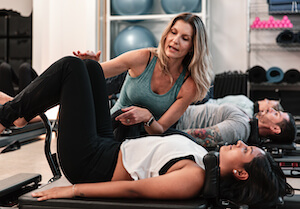
Angela Crowley, a Senior Educator, worked with Laura. She did not force movement. She created the conditions for re-organisation. She supported Laura’s body with pillows. She met the client where she was. She made the client feel safe.
When the nervous system feels safe, it drops its guard. Angela invited small movements. She offered the right challenge at the right dose. She understood the mechanism behind the pattern, not just its appearance. By the end of the session, Laura’s leg extended fully. Her pain decreased. Her body spontaneously reorganised because the conditions were right.
Dosage and Adaptability
This approach allows anatomy to be applied in real time. It supports cueing that is meaningful. It ensures the dosage is correct.
If we challenge a client too much, they brace. If we challenge them too little, they do not adapt. We must find the “Goldilocks” zone. This requires us to view the body as a dynamic system. We look at the interplay of systems. We look at the fascia, the nerves, and the bones.
We move away from “exercises” and toward “experiences.” We want to create positive movement experiences. These experiences shift the client’s belief system. They allow for neuroplasticity. They change the way the brain maps the body.
Confidence grows from Understanding
Why do Polestar teachers seem so confident? It is not because they have memorised more choreography. It is because their confidence grows from understanding rather than performance.
They trust their tools. They know that if they observe the movement pattern, the solution will present itself. They know that anatomy is not a static list of parts. It is a dynamic, living relationship.
You are not just a fitness instructor. You are a movement professional. You are a pathokinesiologist. You analyse the pathology of movement to restore function. You help clients regain their zest for life.
The world is moving. The science of movement is evolving. We invite you to evolve with it. Do not let anatomy feel heavy and unusable. Make it intuitive. Make it practical. Make it transformative.
Conclusion
Are you ready to decode the body? Do you want to move beyond memorisation and master the science of movement patterns?
Explore Advanced Continuing Education, View Course Dates, or Consult us to discuss your clinical application or career path.
Learn the Polestar Difference Today
#PolestarPilates #PilatesTeacherTraining #MovementScience #Pathokinesiology #AnatomyInMotion #MovementPatterns #ClinicalPilates #PolestarDifference #CriticalReasoning #Biomechanics